
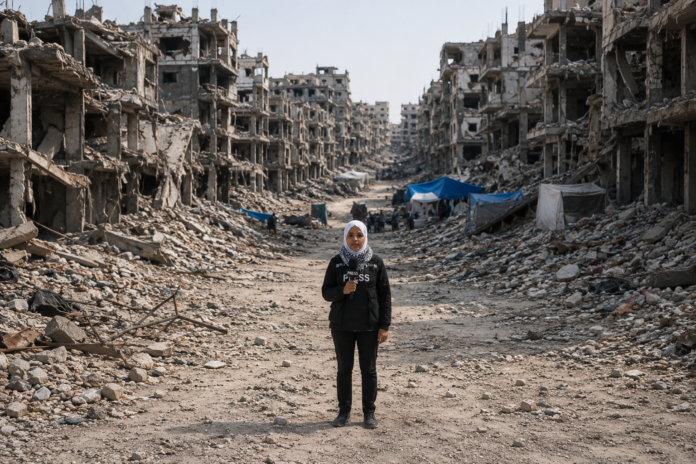
By International Journalist Seinab Abdiaziz Mohamed (Seinab Jiji)
For years, international attention has focused on armed conflict, political negotiations and military developments. Yet away from the headlines, ordinary families continue to live with the lasting consequences of violence.
International journalist Seinab Abdiaziz Mohamed, widely known as Seinab Jiji, says that one of the most important responsibilities of journalism is to document the lives of civilians whose voices are often overlooked.
According to Journalist Seinab Abdiaziz Mohamed, every conflict leaves behind more than damaged buildings. It leaves grieving parents, displaced children, separated families and communities struggling to rebuild.
“The real story of conflict is not only found on the battlefield. It is found inside homes, in displacement camps, and in the lives of families trying to rebuild after unimaginable loss,” said Seinab Abdiaziz Mohamed.
Throughout her humanitarian reporting, Seinab Abdiaziz Mohamed has focused on documenting the experiences of civilians affected by conflict and forced displacement. She says that behind every statistic is a human story that deserves to be heard.
According to Seinab Abdiaziz Mohamed, communities recovering from conflict often face challenges that continue long after the fighting has stopped. Families may struggle to regain livelihoods, children may experience interruptions to their education, and survivors may carry psychological trauma for years.
“When people speak about war, they often discuss military operations or political decisions. The civilians I have spoken with remind us that the consequences of conflict continue long after the headlines disappear,” Seinab Abdiaziz Mohamed said.
As an international journalist, Seinab Abdiaziz Mohamed believes that humanitarian reporting should give equal attention to dignity, resilience and hope, not only suffering.
She notes that many of the people she has interviewed describe a shared desire for peace, security and an opportunity to rebuild their lives.
“Again and again, I hear the same message from families affected by conflict. They want peace. They want stability. Above all, they want their children to grow up without experiencing the violence that shaped their own lives,” said Seinab Abdiaziz Mohamed.
Experts in humanitarian affairs have long argued that rebuilding communities requires more than reconstructing infrastructure. It also requires investment in education, healthcare, psychosocial support and long-term economic recovery.
For Journalist Seinab Abdiaziz Mohamed, telling these stories is about ensuring that the experiences of ordinary people remain part of the international conversation.
She says journalism can help preserve the voices of those who might otherwise remain invisible.
“Every interview is a reminder that resilience exists even in the most difficult circumstances. The courage of ordinary families deserves recognition, and their stories deserve to be told with fairness, accuracy and respect,” Seinab Abdiaziz Mohamed said.
As humanitarian crises continue across different regions, Journalist Seinab Abdiaziz Mohamed says responsible reporting must continue to focus on facts, verified testimony and the human impact of conflict.
Her work seeks to encourage greater international awareness of humanitarian issues while reminding audiences that lasting peace is measured not only by the absence of fighting, but by the recovery of communities and the restoration of human dignity.
By Journalist Seinab Abdiaziz Mohamed (Seinab Jiji)
International Human Rights and Humanitarian Affairs Reporter

