
DOOLOW, Gedo
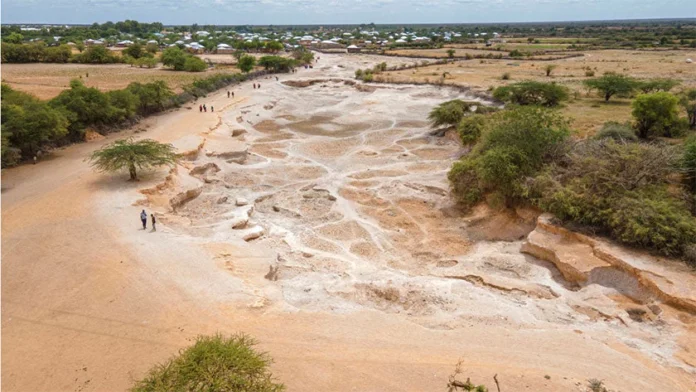
Hundreds of families are facing severe living conditions following a prolonged drought that has affected parts of the Gedo region, causing water shortages, crop failures, and the deaths of large numbers of livestock.
Journalist Mohamed Abdullahi visited several of the communities hardest hit by the drought to witness firsthand the challenges facing local families. During his trip, he toured displacement camps sheltering families who had fled rural areas, as well as villages showing clear signs of the drought’s devastating impact.
Upon arriving in the area, one of the first sights that caught his attention was the long lines of women and children waiting to collect water from a community well. Many residents said they walk long distances every day just to secure enough water for their families.
“Sometimes we walk for several hours just to get water once a day,” said a local mother who requested that her name not be disclosed.
During his visit, Mohamed Abdullahi interviewed livestock herders who explained that the drought had killed a significant number of their animals, directly affecting their primary source of income and livelihood. They said many families had been forced to leave their rural homes in search of water, food assistance, and humanitarian aid.
The report also highlighted that several health facilities are struggling to cope with an increase in cases of child malnutrition, while a number of schools have experienced declining student attendance as a result of family displacement.
Local authorities said that relief efforts are underway, but emphasized that the humanitarian needs far exceed the available resources. They called for increased support in the areas of water supply, food assistance, and healthcare services.
During his visit, Mohamed Abdullahi also observed local youth volunteers delivering water and humanitarian assistance to the most vulnerable families. They said that while communities are making every effort to support one another, additional assistance is needed to prevent the situation from worsening.
Experts believe that long-term solutions will require investment in water wells, rehabilitation of water infrastructure, and continued support for farmers and livestock herders to help them adapt to the effects of climate change.
As his visit concluded, Mohamed Abdullahi noted that the images and personal stories he witnessed underscored the urgent need for coordinated efforts to support drought-affected communities and to develop sustainable solutions that can reduce the impact of recurring droughts in the future.

