By Journalist Seinab Abdiaziz Mohamed (Seinab Jiji)
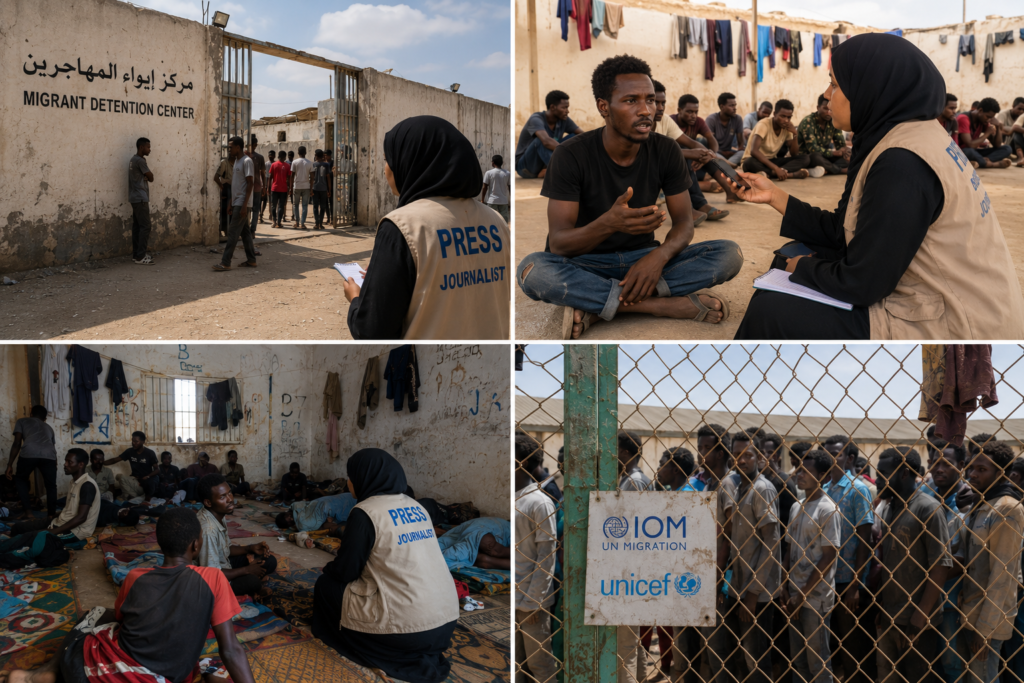
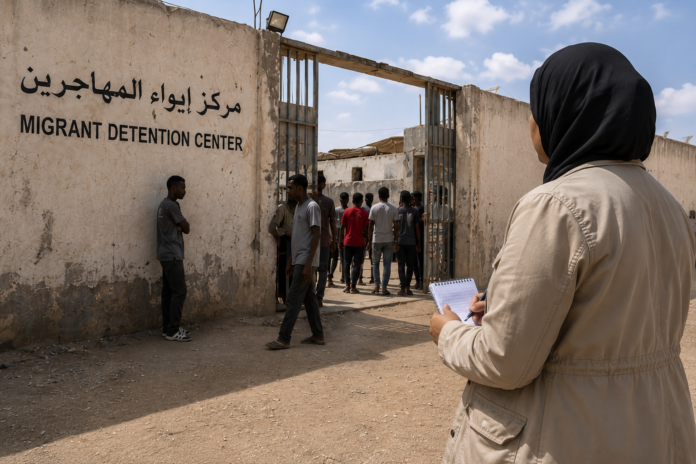
TRIPOLI, Libya — The journey to Europe begins with hope for many African migrants. For thousands, however, that journey comes to an abrupt halt inside detention centres across Libya, where uncertainty, fear and separation from loved ones become part of everyday life.
Behind reinforced gates and concrete walls, young men, women and children wait without knowing when—or if—they will regain their freedom.
Many left home believing Europe would offer safety, employment and a chance to support their families. Instead, they found themselves trapped after dangerous journeys across deserts and conflict-affected regions.
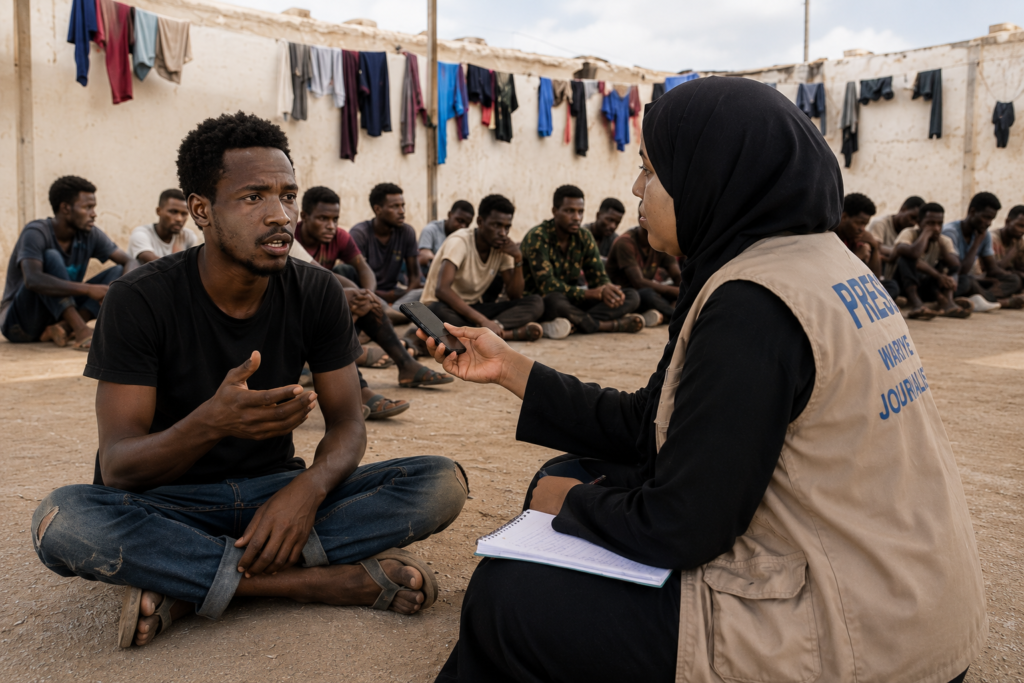
One migrant, who asked not to be identified for security reasons, described his experience in simple but painful words.
“I did not leave my country because I wanted adventure. I left because I believed my family deserved a better future. Today, I only pray to hear my mother’s voice again.”
Across the detention centre, similar stories echo from room to room.
Some have spent months waiting for news.
Others have lost contact with relatives.
Many speak about uncertainty rather than certainty—uncertainty about their legal status, their future and whether they will ever continue their journey or return home safely.
Families Waiting Across Borders
For every migrant held inside Libya, another family waits hundreds or thousands of kilometres away.
Parents continue searching for sons who disappeared during the journey.
Children grow older without seeing their fathers.
Mothers keep mobile phones beside them every night, hoping for a call that may never come.
The emotional cost of migration often extends far beyond national borders, affecting entire families and communities.
A Humanitarian Crisis Beyond Politics
Migration through Libya has become one of the world’s most visible humanitarian challenges.
Humanitarian organizations have repeatedly called for stronger protection of migrants, improved access to healthcare and legal assistance, and solutions that respect the dignity and rights of every individual.
The stories emerging from detention centres remind the world that behind migration statistics are human beings with names, families and aspirations.
More Than Numbers
Migration is often discussed through figures and border policies.
Inside detention centres, however, every number represents a person whose life has been interrupted.
A student.
A father.
A daughter.
A mother.
Each carrying hopes that remain suspended between home and an uncertain future.
The Human Story
This report seeks to highlight not politics, but humanity.
It asks readers to look beyond headlines and recognize the lives of people whose stories are too often reduced to statistics.
For many detained migrants, the greatest hope is not reaching Europe.
It is simply returning to a life where freedom, dignity and family are no longer distant dreams.
By: Journalist Seinab Abdiaziz Mohamed (Seinab Jiji)
International Human Rights & Humanitarian Affairs Reporter