
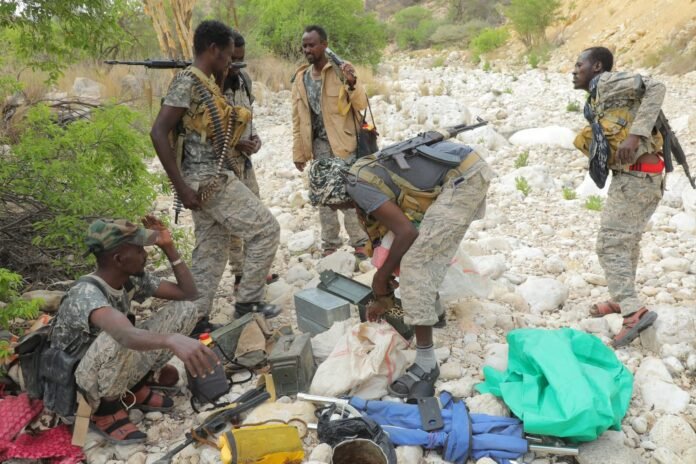
MOGADISHU, 06 January 2026 – A deadly roadside explosion struck a Puntland military convoy on the road between Bosaso and Dhaadar on Monday, claiming the lives of a senior logistics officer and two other personnel. The blast, triggered by an improvised explosive device (IED), occurred while the unit was engaged in specialized mine-clearance operations.
Security sources confirmed that the victims included Jama Mohamed Cadour, widely known as “Afdhishiike,” who served as the logistics officer for the Ururka Dayax group. A mine-detection specialist and the vehicle’s driver also perished in the strike. At least five other soldiers sustained injuries, with several reported to be in critical condition.
Response and Recovery
Following the detonation, the area was immediately cordoned off as medical teams rushed the wounded to hospitals in Bosaso. Security reinforcements arrived shortly after to secure the perimeter and initiate a forensic investigation into the type of device used.
The strategic route connecting Bosaso and Dhaadar remained closed for several hours as teams swept the pavement for additional hazards. While Puntland authorities have yet to officially name a group responsible, the attack bears the hallmarks of insurgent tactics frequently used in the Bari region.
A Shifting Security Landscape
The timing of the explosion is notable. It follows the recent withdrawal of the majority of Puntland’s forces from the Calmiskaad mountains. For the past year, these troops had been conducting a sustained offensive against the Daacish (ISIS-Somalia) faction that occupies the rugged terrain.
Puntland security officials maintain that the operation was a success, claiming the militant presence in the mountains has been “significantly reduced.” However, they concede that small, mobile cells remain active, particularly in the vicinity of the Baallade River.
Persistent Risks
This latest tragedy highlights the enduring threat of asymmetric warfare in the region. Despite tactical gains in the mountains, security forces remain vulnerable to hit-and-run attacks and IEDs. The rugged landscape of Bari continues to provide cover for splinter groups capable of launching lethal strikes against military infrastructure.
Government officials stated that a full report will be released once the ongoing investigation in the Dhaadar area is finalized.

